
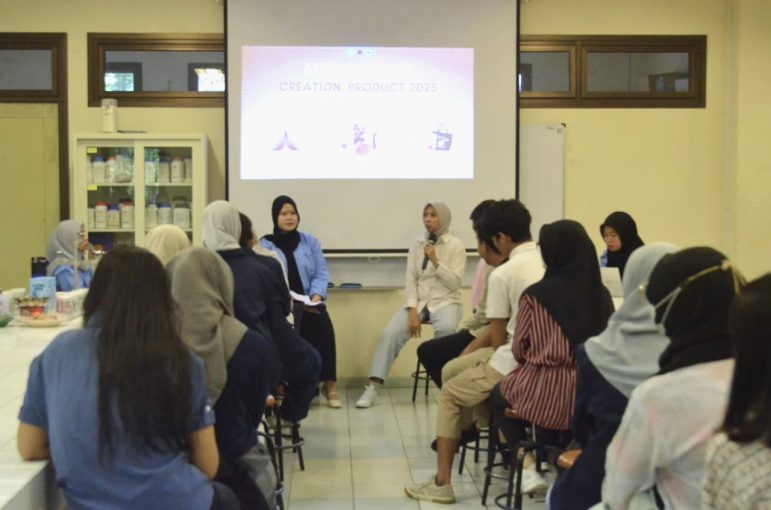
The Department of Scientific Affairs, in collaboration with the Department of Entrepreneurship of the Association of Agricultural Microbiology Students (PERMAHAMI), Faculty of Agriculture, Universitas Gadjah Mada, successfully held the Microbiome Creation Product (MCP) 2025 event on Saturday, 25 October 2025. Held at the Integrated Laboratory of the Agrocomplex, Faculty of Agriculture UGM, this event carried the theme “The Power of Probiotics: From Fermentation to Innovation”, aimed at enhancing participants’ understanding of the role of microorganisms in food production and providing hands-on experience in producing a fermented product—yogurt. The program featured lectures, a talk show, and a practical yogurt-making session as a form of educational outreach on fermentation science and its business potential.
The event began with an opening session and welcoming remarks delivered by the Chairperson of PERMAHAMI, Annisa Hizriani Faudia, and the Head of the Department of Agricultural Microbiology, Ir. Donny Widianto, Ph.D. This was followed by a presentation session in which the speakers discussed the role of microorganisms in fermentation, the health benefits of yogurt, and key factors that influence the quality of fermented products.
Participants then joined a talk show session exploring the speakers’ experiences in developing a yogurt business, marketing strategies, and approaches to innovating probiotic-based products. Enthusiasm filled the room as participants actively engaged with questions throughout the discussion.
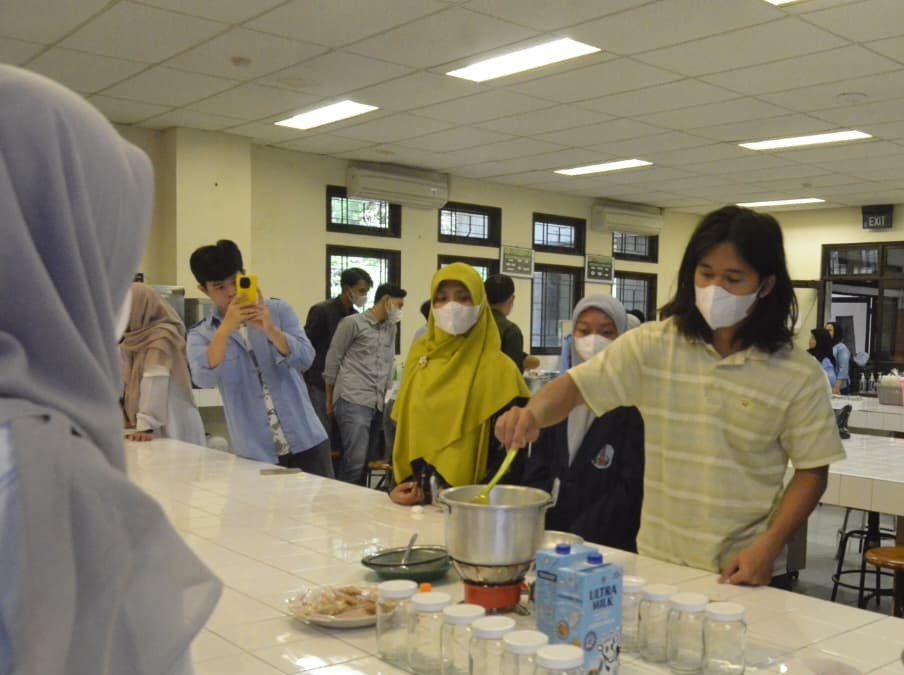
One of the most anticipated parts of the event was the hands-on yogurt fermentation workshop. In this session, participants practiced the entire fermentation process—from ingredient preparation to final product processing—including an innovative addition of butterfly pea flower as a natural colorant. Through this activity, participants not only gained theoretical knowledge about yogurt production but also practical skills applicable to developing functional food products.
MCP 2025 received positive feedback from both participants and supervising faculty members. The program was considered successful in achieving its goals of increasing microbiome literacy and opening opportunities for sustainable, fermentation-based entrepreneurship. The event concluded with the hope that MCP will continue in future years and serve as a platform for students to deepen their interests in food microbiology and microorganism-based product innovation.
This activity represents a significant step by the Department of Agricultural Microbiology, Faculty of Agriculture UGM, in supporting the Sustainable Development Goals, particularly SDG 4: Quality Education, SDG 8: Decent Work and Economic Growth, and SDG 16: Peace, Justice, and Strong Institutions.