
Dr. Desi Utami, a lecturer from the Department of Agricultural Microbiology, Faculty of Agriculture, Universitas Gadjah Mada (UGM), was invited as a speaker at the scientific forum entitled “Harmonized Biosafety Assessment and Sustainable Agriculture: Accelerating Innovation with Impact for Indonesian Smallholders.” The event was organized by CropLife Indonesia in collaboration with the Indonesian Biotechnology Consortium and Lab Indonesia, and was held at ICE BSD City on April 17, 2026.
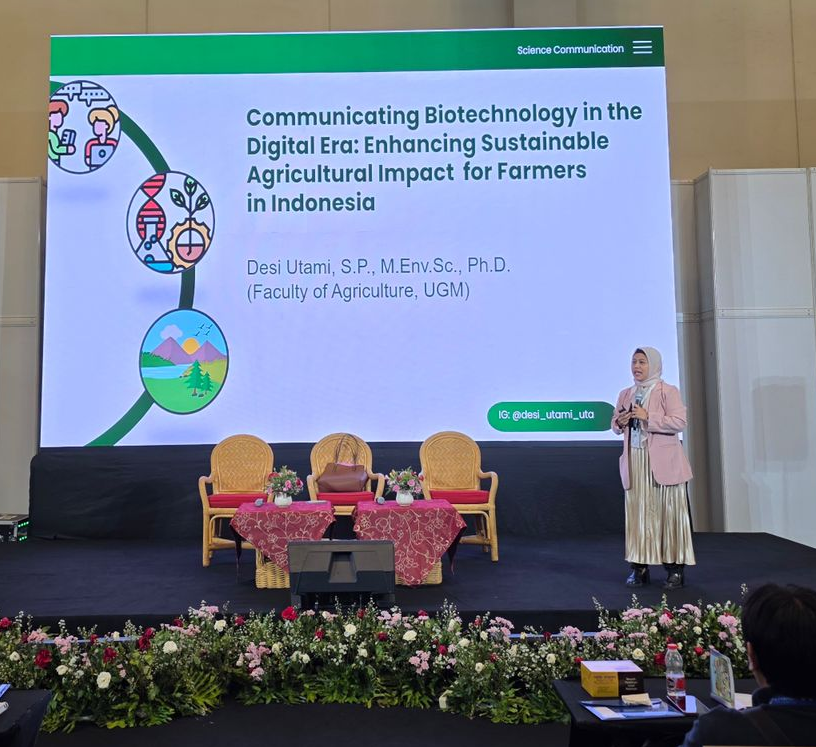
The forum brought together researchers, industry representatives, policymakers, and biotechnology practitioners to discuss strategies for advancing sustainable agriculture through science-based innovations and harmonized biosafety assessments. The participation of UGM’s Agricultural Microbiology Department in the event reflects its ongoing commitment to promoting scientific innovation and strengthening communication between researchers and agricultural stakeholders.
During the forum, Dr. Desi delivered a presentation entitled “Communicating Biotechnology in the Digital Era: Enhancing Sustainable Agricultural Impact for Farmers in Indonesia.” In her presentation, she emphasized the crucial role of science communication in bridging the gap between biotechnology advancements and farmers’ understanding and acceptance of new technologies.

She explained that biotechnology offers significant opportunities to support sustainable agricultural development through innovations such as biofertilizers, biopesticides, and genetically engineered crops. However, the benefits of these technologies cannot be fully realized unless information is communicated effectively and in ways that are easily understood by farmers and end-users.
According to Dr. Desi, biotechnology communication should be delivered using simple, relevant, and practical language that aligns with farmers’ needs and everyday experiences. Effective communication can accelerate the adoption of scientific innovations and contribute directly to improved productivity, environmental sustainability, and agricultural resilience.
The presentation also highlighted the growing importance of digital platforms as tools for agricultural knowledge dissemination. With Indonesia’s rapidly expanding internet user base, digital technologies offer new opportunities to improve scientific literacy, combat misinformation, and strengthen communication among farmers, extension workers, researchers, and other stakeholders.
One example highlighted during the presentation was Desa Apps, a digital platform developed by the Faculty of Agriculture UGM to facilitate interaction among farmers, agricultural extension agents, and academics. Through the platform, users can exchange information, participate in discussions, and access agricultural knowledge and data more efficiently.
“Biotechnology, supported by effective digital communication, is a key driver for strengthening sustainable agriculture and empowering Indonesian farmers,” Dr. Desi stated.
Her participation in the forum demonstrates the active role of the Department of Agricultural Microbiology and the Faculty of Agriculture UGM in advancing science-based innovation and promoting its dissemination to broader communities. The event also reinforced the role of academics in connecting research outcomes with the real needs of farmers, particularly smallholder farmers who play a vital role in Indonesia’s agricultural sector.
Through its engagement in national and international scientific forums, the Department of Agricultural Microbiology continues to contribute to the development of sustainable agricultural systems while strengthening collaboration among academia, industry, government, and farming communities.
This activity contributes to the achievement of several Sustainable Development Goals (SDGs), including SDG 2 (Zero Hunger), SDG 3 (Good Health and Well-being), SDG 4 (Quality Education), SDG 8 (Decent Work and Economic Growth), SDG 9 (Industry, Innovation and Infrastructure), SDG 12 (Responsible Consumption and Production), SDG 13 (Climate Action), and SDG 17 (Partnerships for the Goals).