
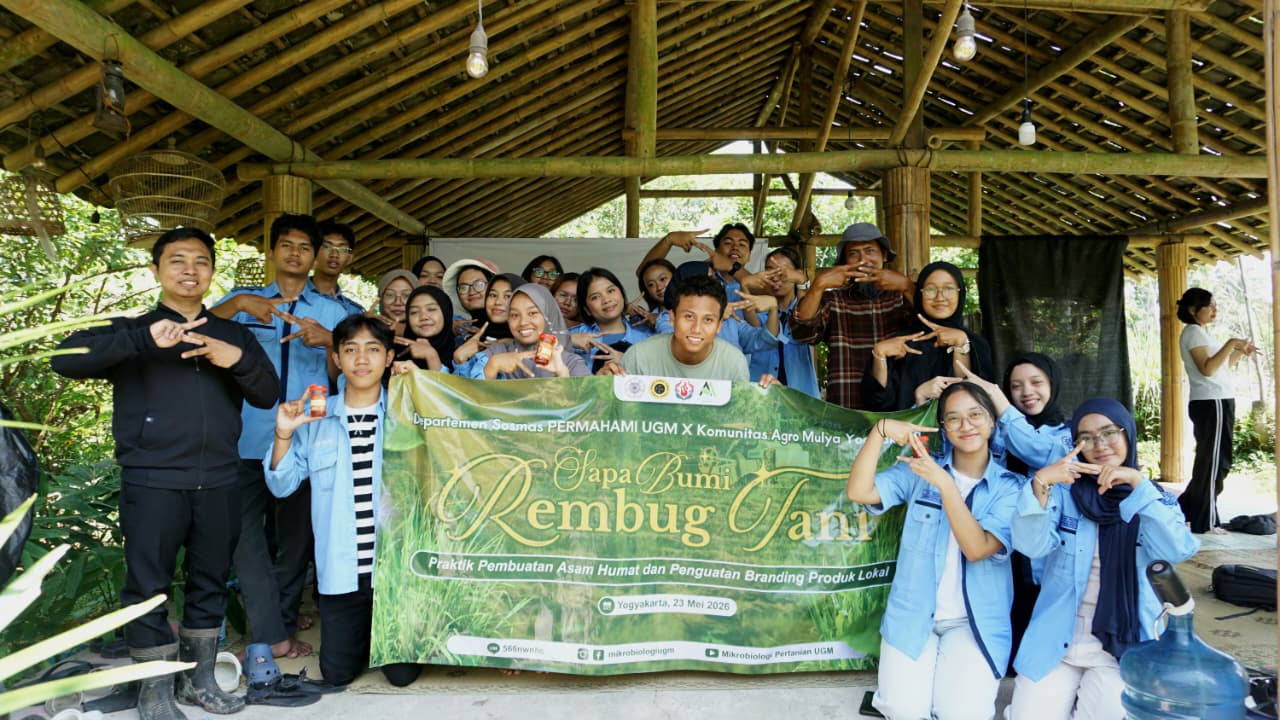
 As part of efforts to strengthen student engagement in community empowerment and agricultural development, the Social Affairs Department of PERMAHAMI (Agricultural Microbiology Student Association), Faculty of Agriculture, Universitas Gadjah Mada (UGM), organized a community outreach program entitled “Sapa Bumi, Rembug Tani”. The activity was conducted in collaboration with Agro Mulya Eco Farm, a local farming community located in Kalasan, Special Region of Yogyakarta.
The program served as a platform for students and farmers to exchange experiences, knowledge, and best practices in sustainable agriculture. Through this collaborative approach, students were not only able to gain valuable learning experiences beyond the classroom but also had the opportunity to contribute directly to community development.
During the event, Agricultural Microbiology students shared insights on agricultural product marketing strategies that could help expand the market reach of products developed by Agro Mulya Eco Farm. Discussions covered topics such as digital marketing, product promotion, consumer engagement, and the importance of building a strong identity and added value for agricultural products.

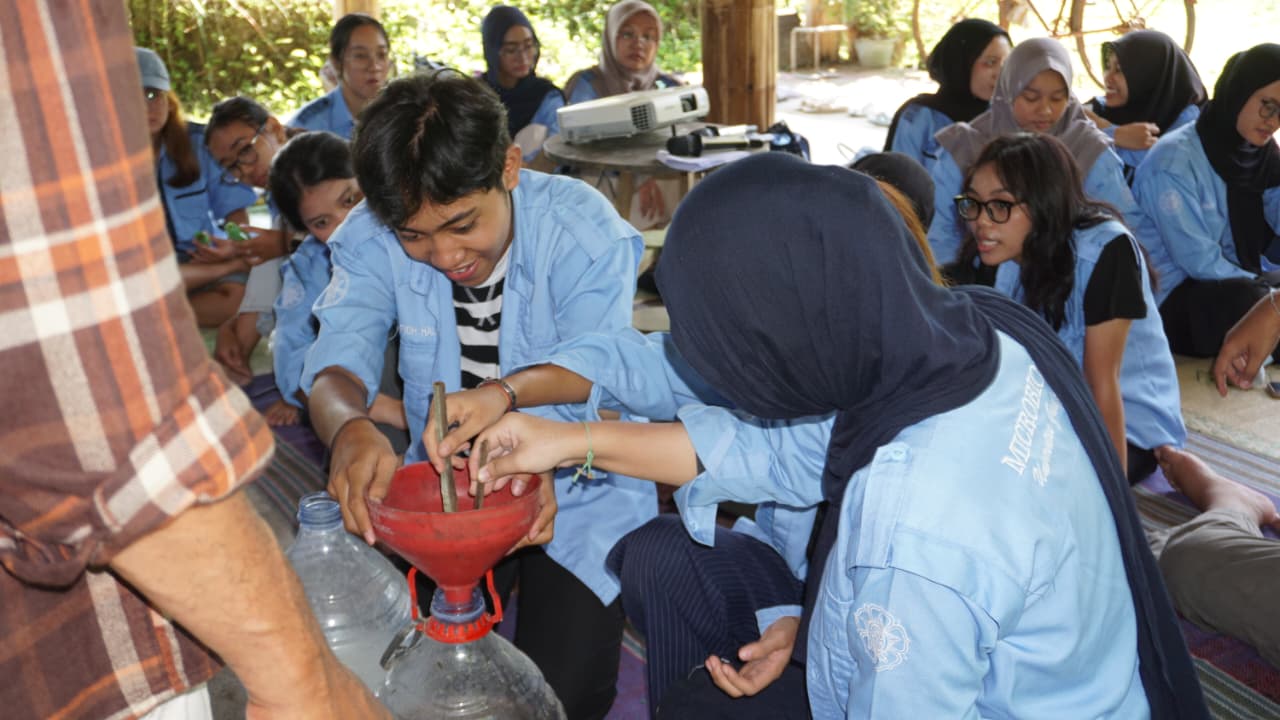
In return, members of Agro Mulya Eco Farm introduced students to practical farming techniques and experiences from the field. One of the key topics presented was the production of humic acid, which is known for its benefits in improving soil quality, enhancing nutrient availability, and supporting plant growth. Participants were also invited to explore the farm directly and observe various sustainable agricultural practices implemented by the community.
Through these field-based learning activities, students gained firsthand experience of the challenges and opportunities faced by farmers in managing agricultural enterprises. Direct interaction with farming practitioners provided a deeper understanding of how scientific knowledge learned in university can be applied to real-world agricultural settings.
The organizing committee explained that the primary objective of the program was to establish a mutually beneficial relationship between students and local communities through the exchange of knowledge, ideas, and experiences. By fostering such collaboration, the initiative aims to strengthen the capacity of farming communities while providing students with practical insights that support both their academic and professional development.
Beyond technical knowledge, the activity also highlighted the importance of communication, collaboration, and community engagement in agricultural development. Students learned that sustainable agriculture is not driven solely by technological innovation but also by the active participation of local communities and stakeholders.
The “Sapa Bumi, Rembug Tani” program reflects the commitment of Agricultural Microbiology students at UGM to applying their knowledge for community benefit while learning directly from practitioners in the field. Through the synergy between students and farming communities, the program is expected to contribute to the development of relevant, inclusive, and sustainable solutions for advancing Indonesia’s agricultural sector.
This activity contributes to the achievement of several Sustainable Development Goals (SDGs), including SDG 2 (Zero Hunger), SDG 4 (Quality Education), SDG 11 (Sustainable Cities and Communities), SDG 12 (Responsible Consumption and Production), and SDG 17 (Partnerships for the Goals).