Universitas Gadjah Mada (UGM) has once again deployed students through the Community Service and Community Empowerment Learning Program (KKN-PPM) Period II of 2026 as part of the university’s commitment to supporting community development through science-based approaches. One of the KKN units, supervised by Nur Akbar Arofatullah, S.P., M.Biotech., Ph.D., a lecturer at the Department of Agricultural Microbiology, Faculty of Agriculture, UGM, will conduct its community engagement activities in Padaherang Village and Paledah Village, Padaherang District, Pangandaran Regency, West Java.
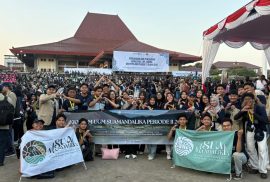
SDG 2: ZERO HUNGER
Thousands of students from Universitas Gadjah Mada (UGM) have officially begun their community engagement journey through the Community Service and Community Empowerment Learning Program (KKN-PPM) Period II of 2026. Following the official deployment ceremony conducted by the university, students were dispatched to various regions across Indonesia to implement community empowerment programs for approximately 50 days.
One of the KKN units assigned to the Province of West Nusa Tenggara will carry out its activities in Kuta Village and Mertak Village, Pujut District, Central Lombok Regency. The unit is supervised by Susanti Mugi Lestari, S.P., M.Si., Ph.D., a lecturer at the Department of Agricultural Microbiology, Faculty of Agriculture, Universitas Gadjah Mada.
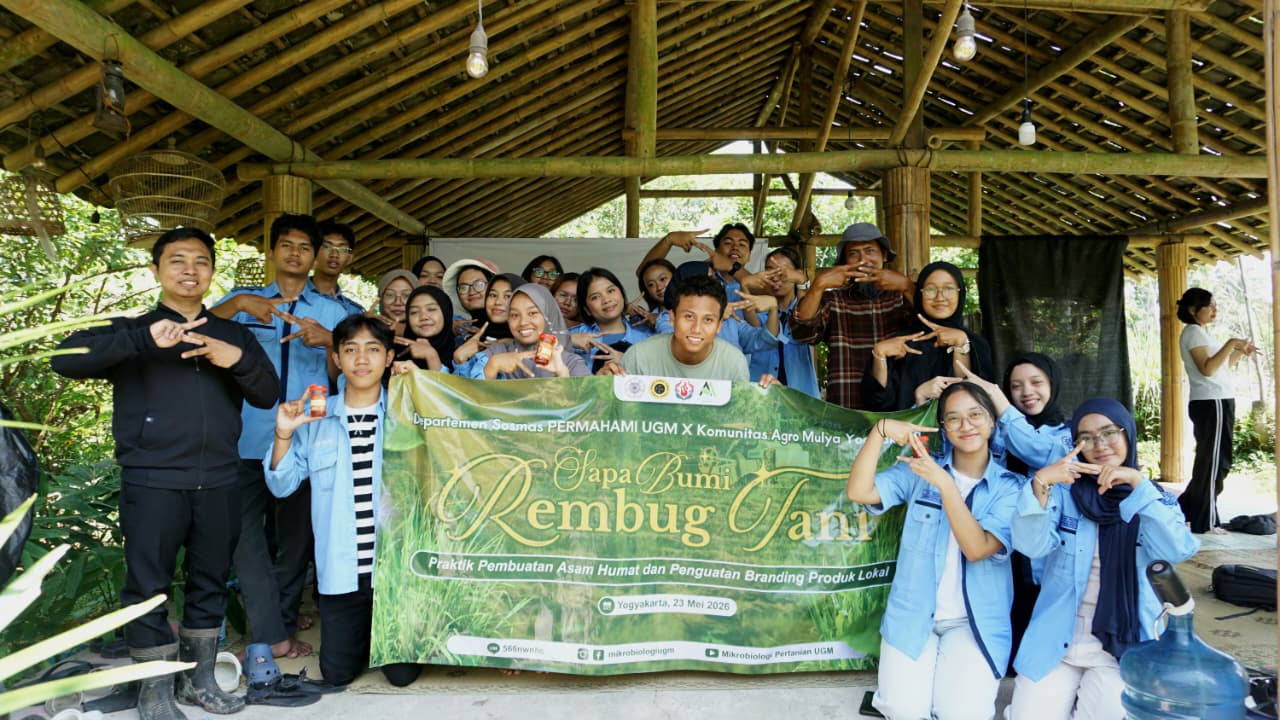
As part of efforts to strengthen student engagement in community empowerment and agricultural development, the Social Affairs Department of PERMAHAMI (Agricultural Microbiology Student Association), Faculty of Agriculture, Universitas Gadjah Mada (UGM), organized a community outreach program entitled “Sapa Bumi, Rembug Tani”. The activity was conducted in collaboration with Agro Mulya Eco Farm, a local farming community located in Kalasan, Special Region of Yogyakarta.
The program served as a platform for students and farmers to exchange experiences, knowledge, and best practices in sustainable agriculture. Through this collaborative approach, students were not only able to gain valuable learning experiences beyond the classroom but also had the opportunity to contribute directly to community development.

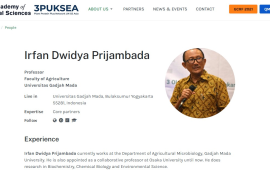
The Faculty of Agriculture, Universitas Gadjah Mada (UGM), continues to strengthen its international research collaborations through participation in the Plant Protein Plus Network UK–Southeast Asia (3PUKSEA). As part of this initiative, Prof. Irfan Dwidya Prijambada from the Department of Agricultural Microbiology, Faculty of Agriculture UGM, took part in a series of academic and industry engagement activities in the United Kingdom in April 2026. The program, titled “Plant Protein Plus Network UK–SE Asia (3PUKSEA): Multi-disciplinary Collaboration for Plant Protein Research and Innovation Network between the UK and Southeast Asia,” focuses on developing sustainable plant-based protein sources through international research partnerships (https://3puksea.io.vn/index.php/news-events/visits-the-uk-2026).
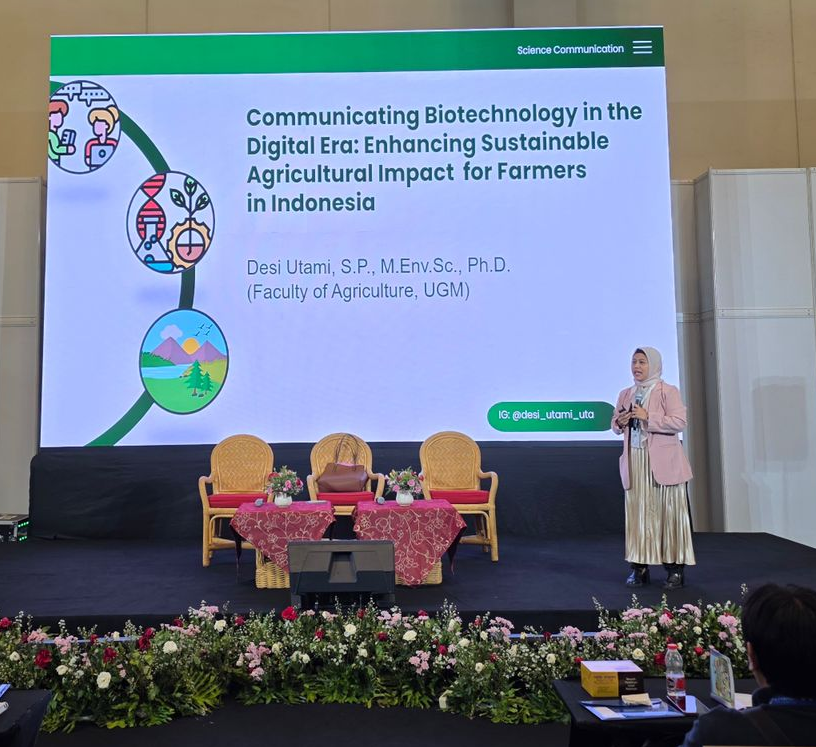
Dr. Desi Utami, a lecturer from the Department of Agricultural Microbiology, Faculty of Agriculture, Universitas Gadjah Mada (UGM), was invited as a speaker at the scientific forum entitled “Harmonized Biosafety Assessment and Sustainable Agriculture: Accelerating Innovation with Impact for Indonesian Smallholders.” The event was organized by CropLife Indonesia in collaboration with the Indonesian Biotechnology Consortium and Lab Indonesia, and was held at ICE BSD City on April 17, 2026.


The rapid advancement of modern biotechnology has opened new opportunities for accelerating livestock breeding programs and improving genetic quality in Indonesia. In support of these developments, Nur Akbar Arofatullah, S.P., M.Biotech., Ph.D., a lecturer in Agricultural Microbiology at the Faculty of Agriculture, Universitas Gadjah Mada (UGM), has been actively involved in discussions and explorations of DNA synthesis (DNA printing) technology and Loop-Mediated Isothermal Amplification (LAMP)-based molecular diagnostic methods together with international industry partners and experts.
Praharsiwi Nisa Az Zahro, a student of the Agricultural Microbiology Study Program at Universitas Gadjah Mada (UGM), successfully completed her Field Work Practice (Kerja Lapangan/KL) and presented the results through a Field Work Seminar on campus. Her journey began at PT Ajinomoto Indonesia – Mojokerto Factory, one of Indonesia’s largest food manufacturing facilities. During the seminar, she presented the outcomes of her one-month industrial placement and research project entitled “Microbiological Contamination Analysis and Colony Morphological Characterization in a Seasoned Flour Manufacturing Plant at PT Ajinomoto Indonesia – Mojokerto Factory.”
The Faculty of Agriculture at Universitas Gadjah Mada (UGM), through its Agricultural Microbiology Study Program, continues to strengthen international research collaboration through a joint research project with Mitsui Chemicals Crop & Life Solutions (MCCLS) and The University of Osaka, Japan. The project focuses on the development of microorganism-based bioinsecticides as environmentally friendly alternatives for pest management. As an initial step in coordinating the research activities, the first progress report meeting was held online on May 13, 2026, to discuss the preliminary research outcomes and future research plans.
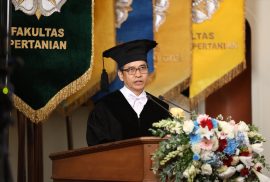
Universitas Gadjah Mada (UGM) reaffirmed its commitment to advancing science and technology through the inauguration of Prof. Ir. Donny Widianto, Ph.D. as a Professor in Microbial Biotechnology at the Faculty of Agriculture. The inauguration ceremony was held on Thursday, October 30, 2025, at the UGM Central Building, and was broadcast live via the official YouTube channel of Universitas Gadjah Mada. The event was attended by members of the academic community, family, and invited guests from various institutions.
The Faculty of Agriculture, Universitas Gadjah Mada (UGM) once again carried out a community service program by introducing an innovation in the use of fermented duckweed (Lemna sp.) as feed for fish and livestock. The activity was held at the Al-Dzikro Orphanage Foundation, Imogiri, Bantul, as an effort to promote food self-sufficiency while also encouraging productive economic enterprises within the orphanage.
Duckweed, or kiambang, is a high-protein aquatic plant with great potential as an alternative feed source. Through the fermentation process, the nutritional value of duckweed can be enhanced and its digestibility improved, thereby not only reducing feed production costs but also opening new business opportunities based on local resources.